Topic 5.1: Reaction Rates Revision Notes

Topic 5.1: Reaction Rates Revision Notes
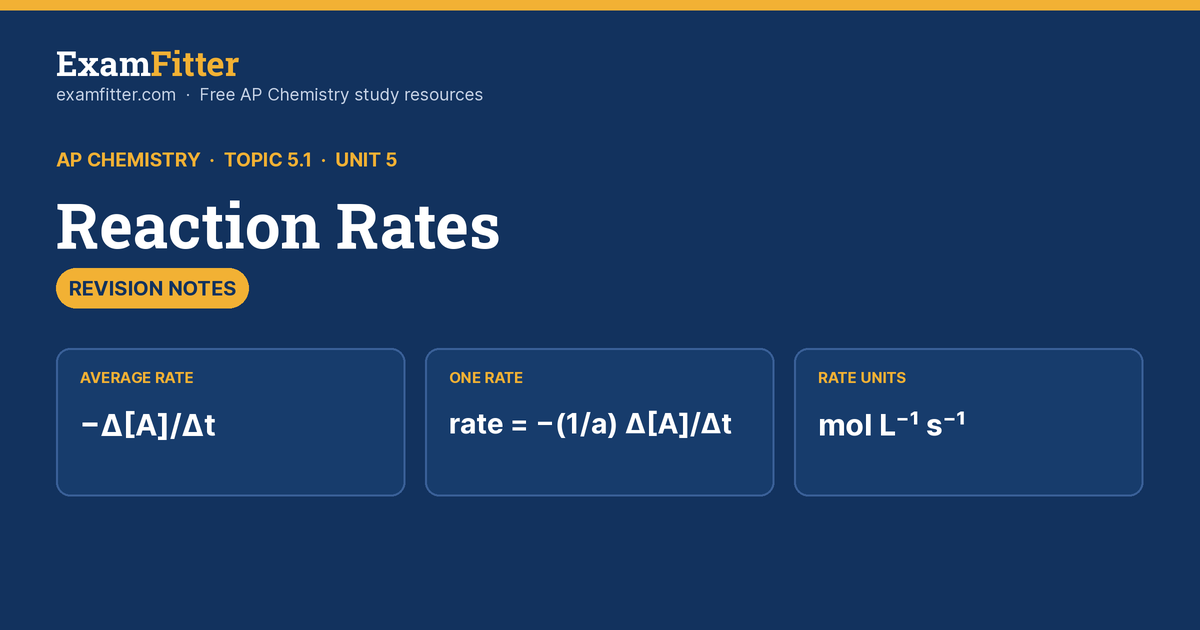
What the Rate Measures A reaction rate measures how fast a concentration changes. It is the change in concentration of a reactant or product divided by the time the change takes. Concentration is measured in mol/L, written M, so a rate carries units of mol L⁻¹ s⁻¹, usually shortened to M/s. Rates in M/min appear … Read more
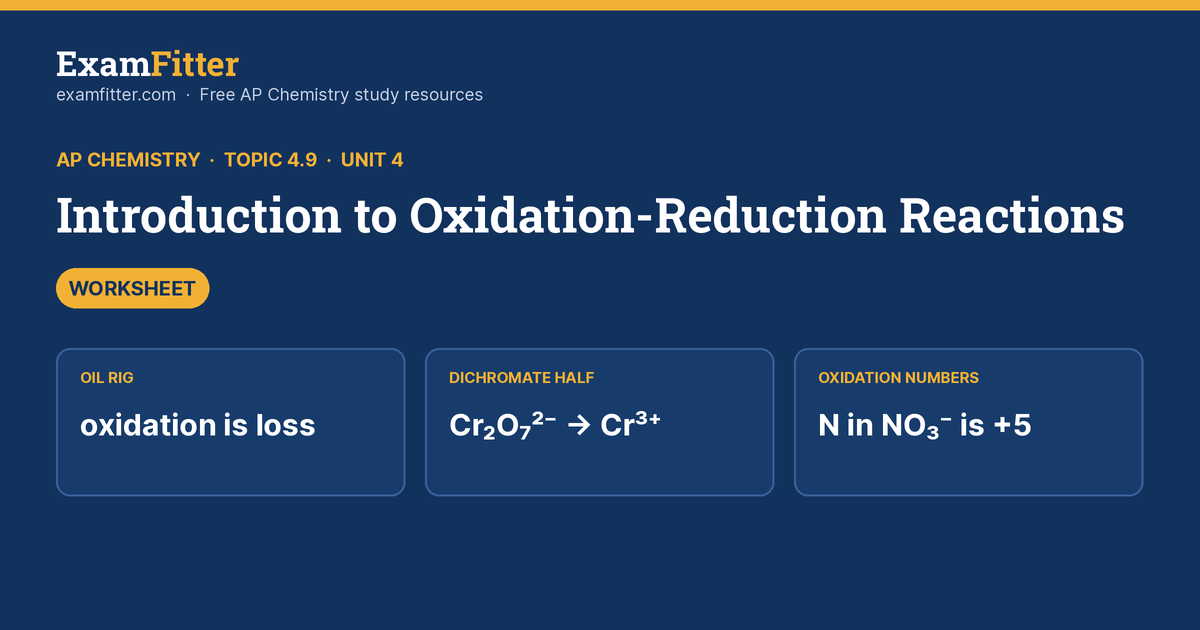
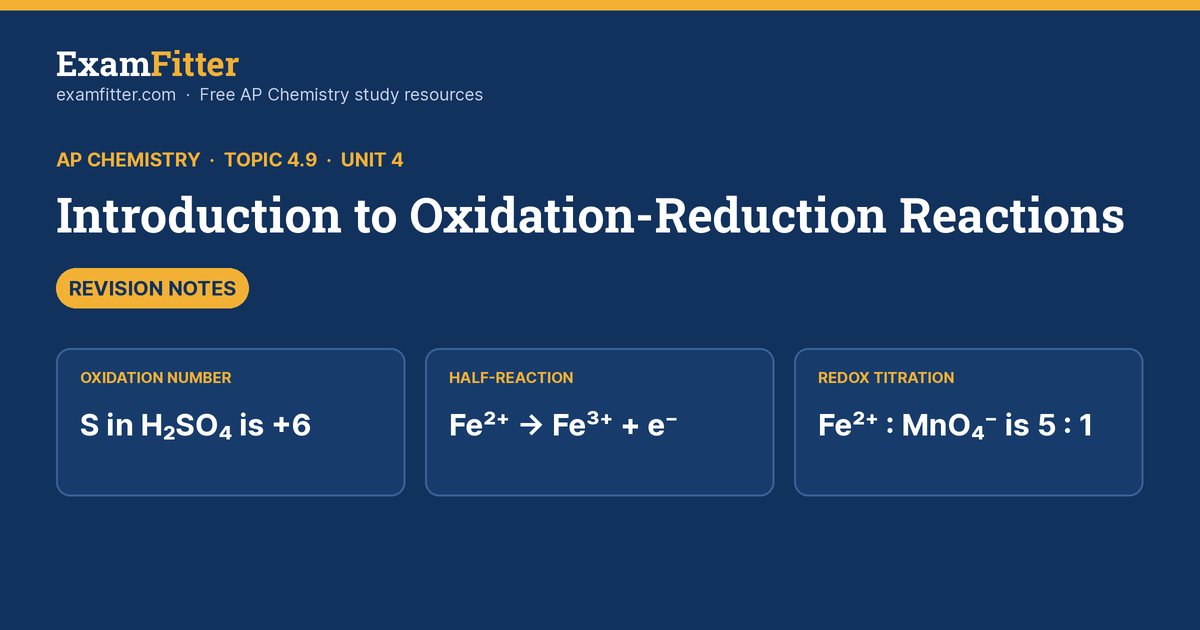
Topic 4.9: Introduction to Oxidation-Reduction Reactions Worksheet

Topic 4.9: Introduction to Oxidation-Reduction Reactions Worksheet

How to Use This Worksheet Work in order. Section A checks the definitions, the oxidation number rules and the agent names. Section B practises assigning oxidation numbers, writing half-reactions and balancing in acid, including a disproportionation. Section C combines balancing with redox titration calculations in exam style. Reference facts used throughout. OIL RIG: Oxidation Is … Read more

Topic 4.8: Introduction to Acid-Base Reactions Worksheet

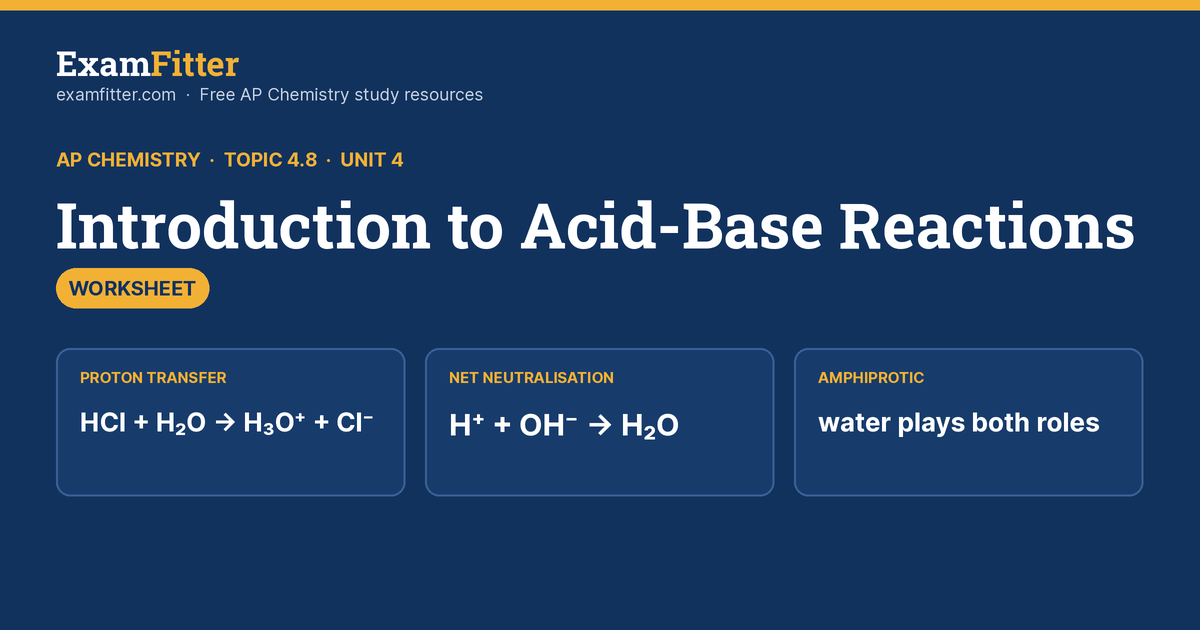
Topic 4.8: Introduction to Acid-Base Reactions Worksheet

How to Use This Worksheet Work in order. Section A checks the definitions, conjugate pairs, and the strong/weak distinction. Section B practises net ionic equations for neutralisations, carbonate accepting protons one step at a time, and reading a particle snapshot. Section C combines stepwise proton donation, a measured strength comparison, and amphiprotic behaviour in exam … Read more

Topic 4.7: Types of Chemical Reactions Worksheet

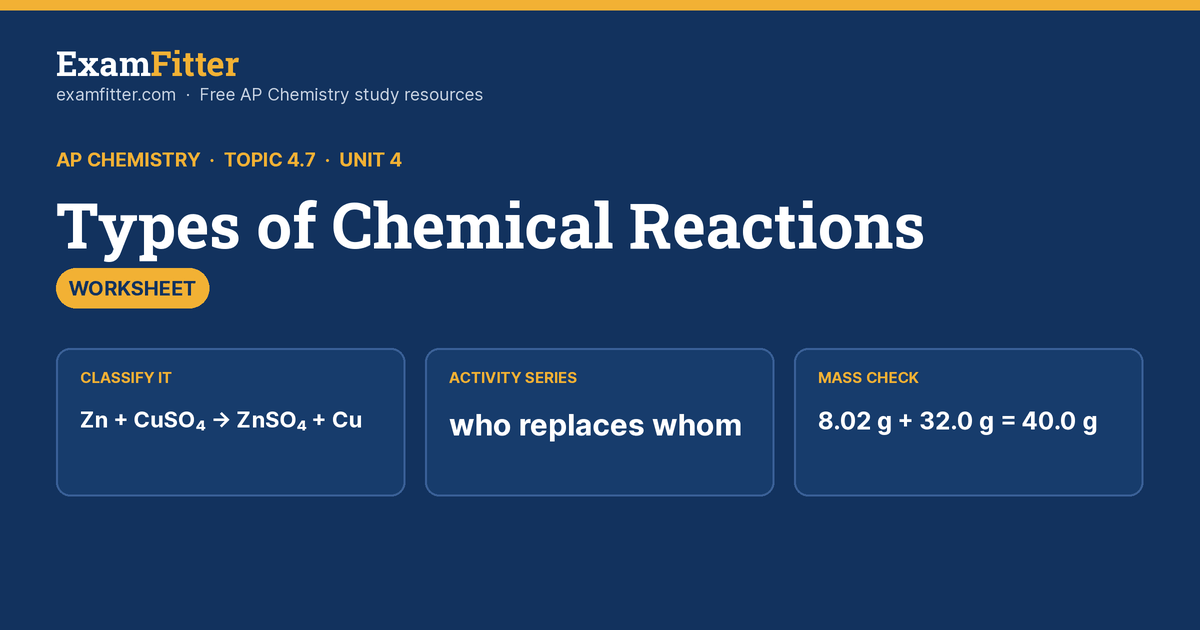
Topic 4.7: Types of Chemical Reactions Worksheet

How to Use This Worksheet Work in order. Section A checks the five patterns, the three reaction families, and the activity series. Section B practises predicting products: replacements that do or do not run, cation swaps, a carbonate fizzing, and two reactions carried through with numbers. Section C combines classification, prediction and electron transfer in … Read more

Topic 4.7: Types of Chemical Reactions Revision Notes

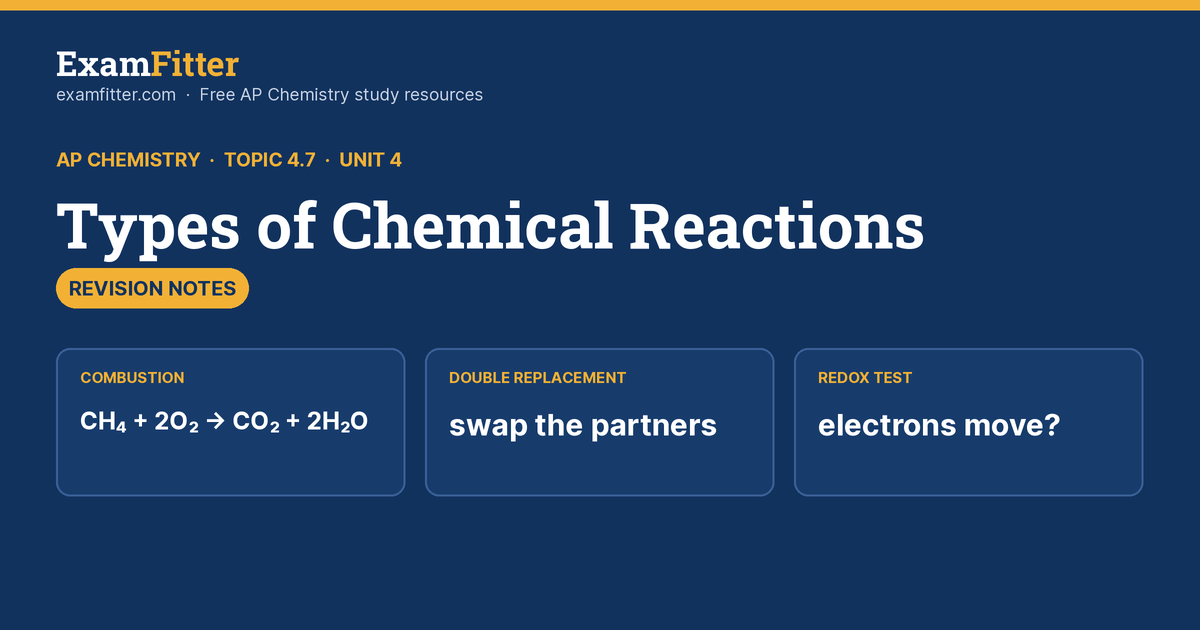
Topic 4.7: Types of Chemical Reactions Revision Notes

Two Ways of Sorting the Same Reaction Chemists sort reactions in two independent ways; one reaction normally takes a label from each. The first sorts by pattern, the arrangement of reactants and products: synthesis, decomposition, single replacement, double replacement and combustion. The second sorts by what changes hands. Acid-base reactions transfer H⁺ ions, precipitation reactions … Read more

Topic 4.6: Introduction to Titration Worksheet

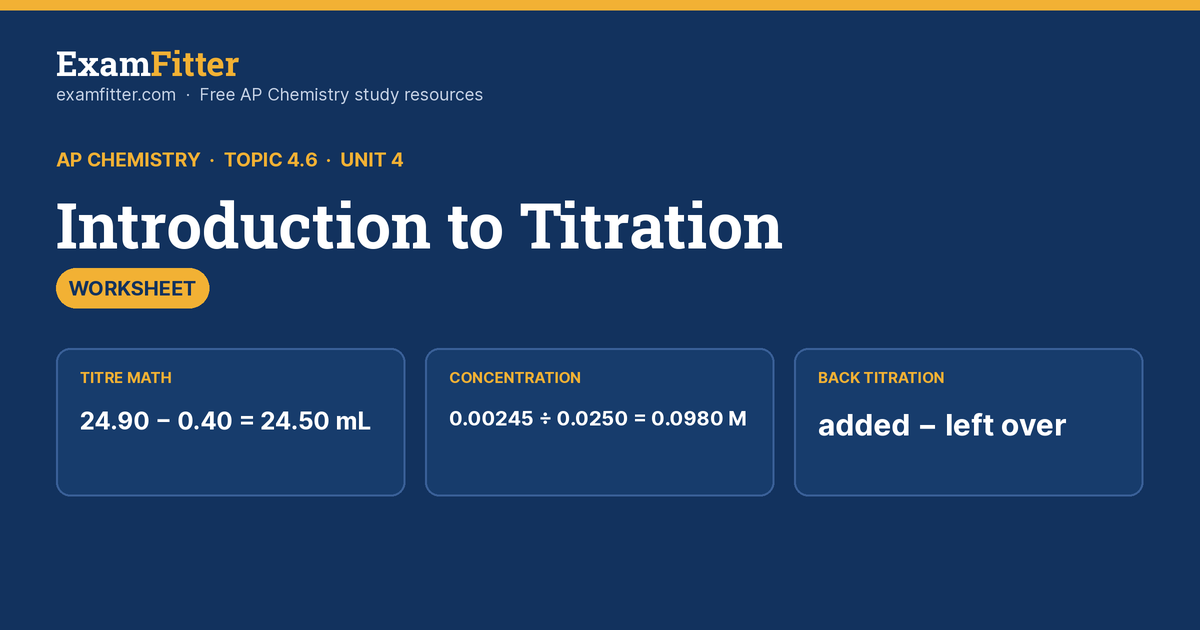
Topic 4.6: Introduction to Titration Worksheet

How to Use This Worksheet Work in order. Section A checks the ideas: the roles of the two solutions, the apparatus, and the difference between the endpoint and the equivalence point. Section B builds the calculation: 1 : 1 titrations, ratios that are not 1 : 1, averaging concordant titres, and a back titration. Section … Read more

Topic 4.6: Introduction to Titration Revision Notes

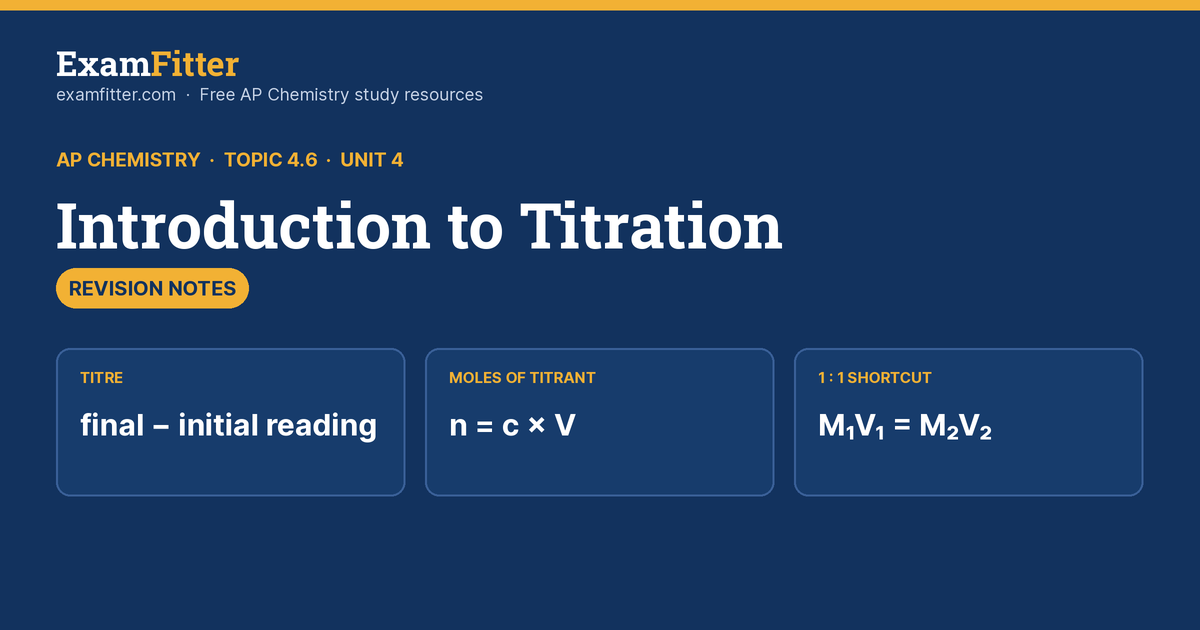
Topic 4.6: Introduction to Titration Revision Notes

What a Titration Measures A titration finds the concentration of a solution by reacting it with a solution of known concentration until the reaction is exactly complete. The solution of unknown concentration is the analyte, a measured volume of it sitting in a conical flask. The solution of known concentration is the titrant, added slowly … Read more

Topic 4.5: Stoichiometry Worksheet

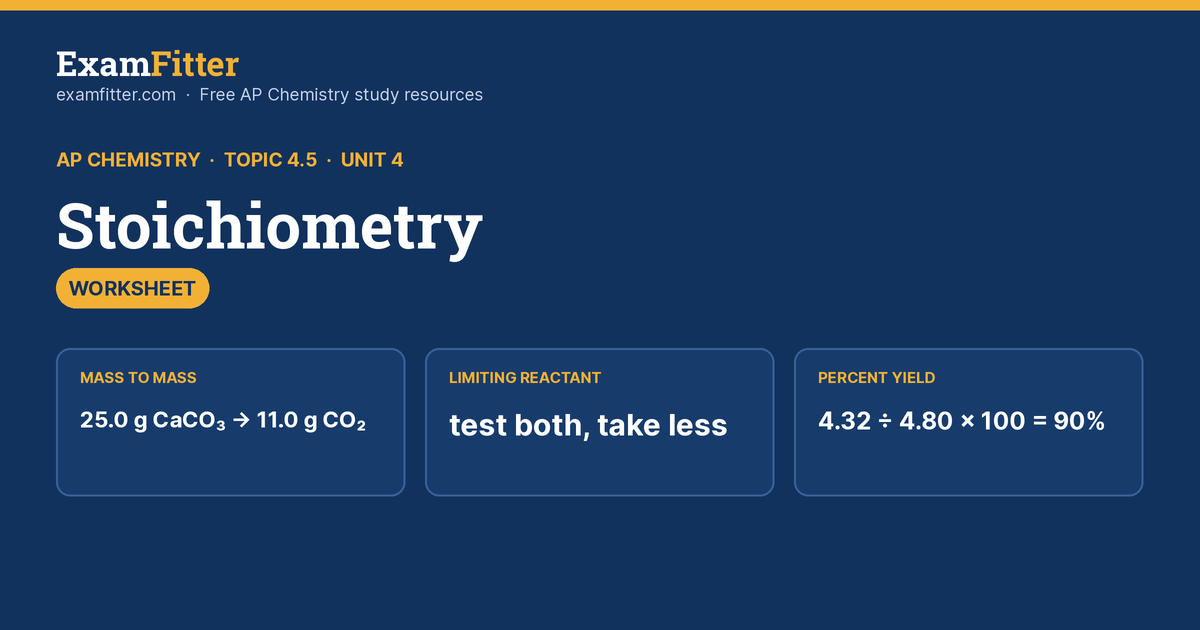
Topic 4.5: Stoichiometry Worksheet

How to Use This Worksheet Work in order. Section A checks the ideas: where mole ratios come from, the key definitions, and the basic conversions. Section B builds the skill: mass to mass calculations, limiting reactants, percent yield and solution stoichiometry. Section C combines everything in exam style, including testing claims that sound plausible but … Read more