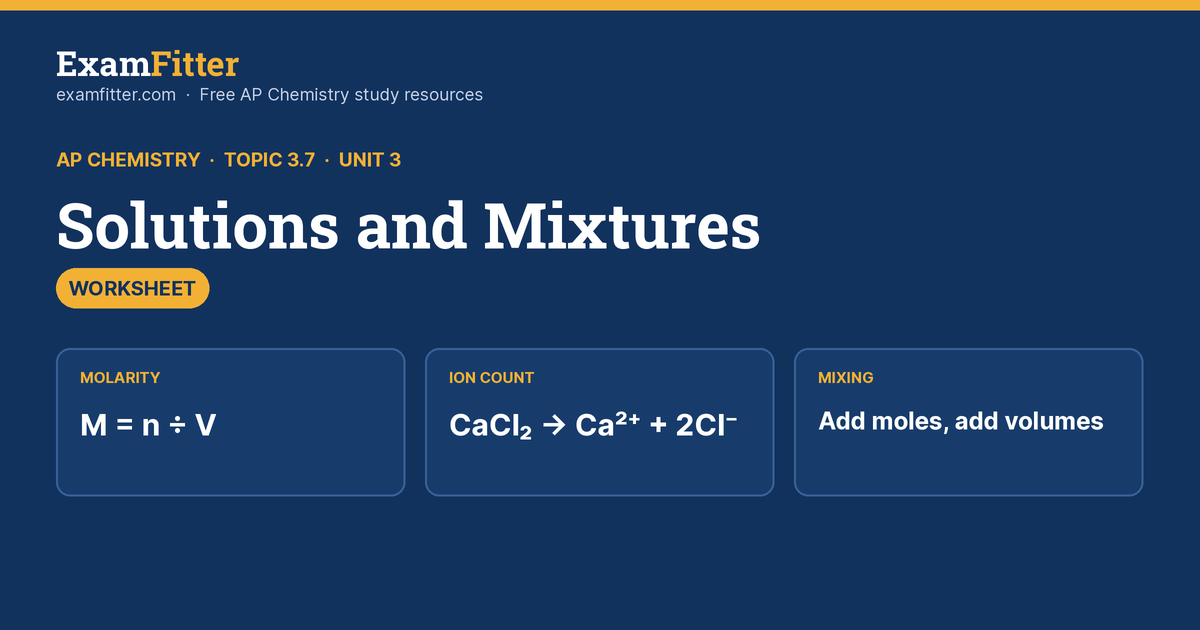
Topic 3.7: Solutions and Mixtures Worksheet

Topic 3.7: Solutions and Mixtures Worksheet

How to Use This Worksheet Work through the sections in order. Section A checks the vocabulary of mixtures and the particulate picture of a solution, Section B builds fluency with molarity, ion counting, dilution and mixing, and Section C combines them in exam style. Keep two questions separate throughout: how much solute is present, and … Read more

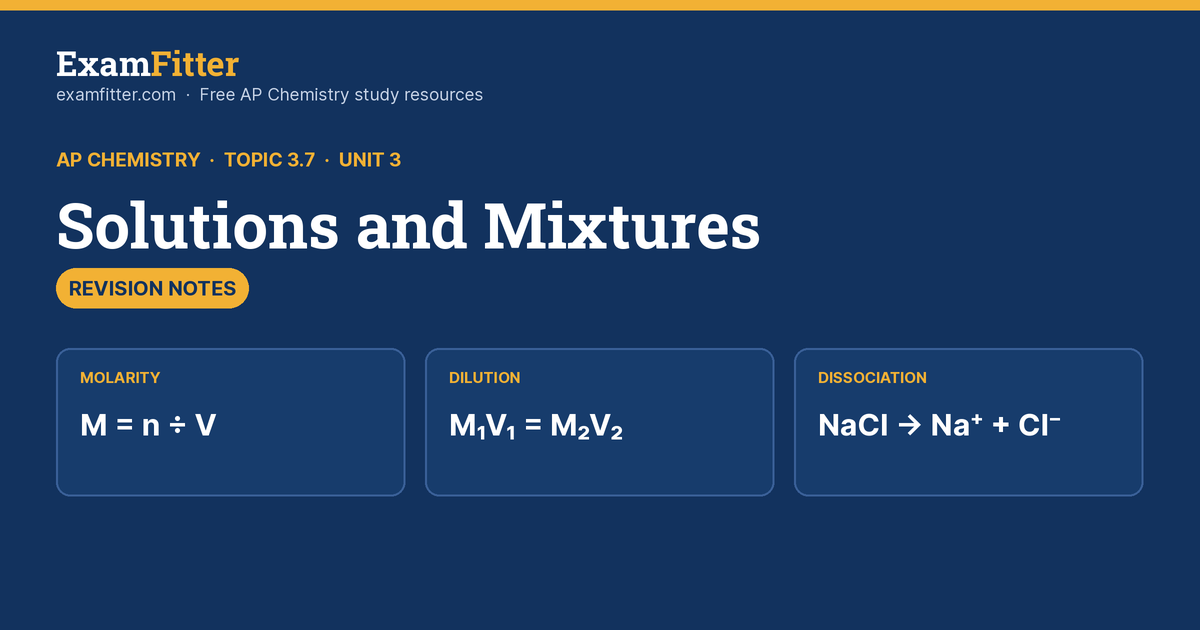
Topic 3.7: Solutions and Mixtures Revision Notes

Topic 3.7: Solutions and Mixtures Revision Notes

Mixtures: Variable Composition, Uniform When Dissolved A mixture holds two or more substances physically combined, each keeping its own identity. Unlike a compound, whose elements sit in a fixed mass ratio, its composition varies freely with how much of each component was added. A homogeneous mixture has the same composition and properties throughout. A solution … Read more

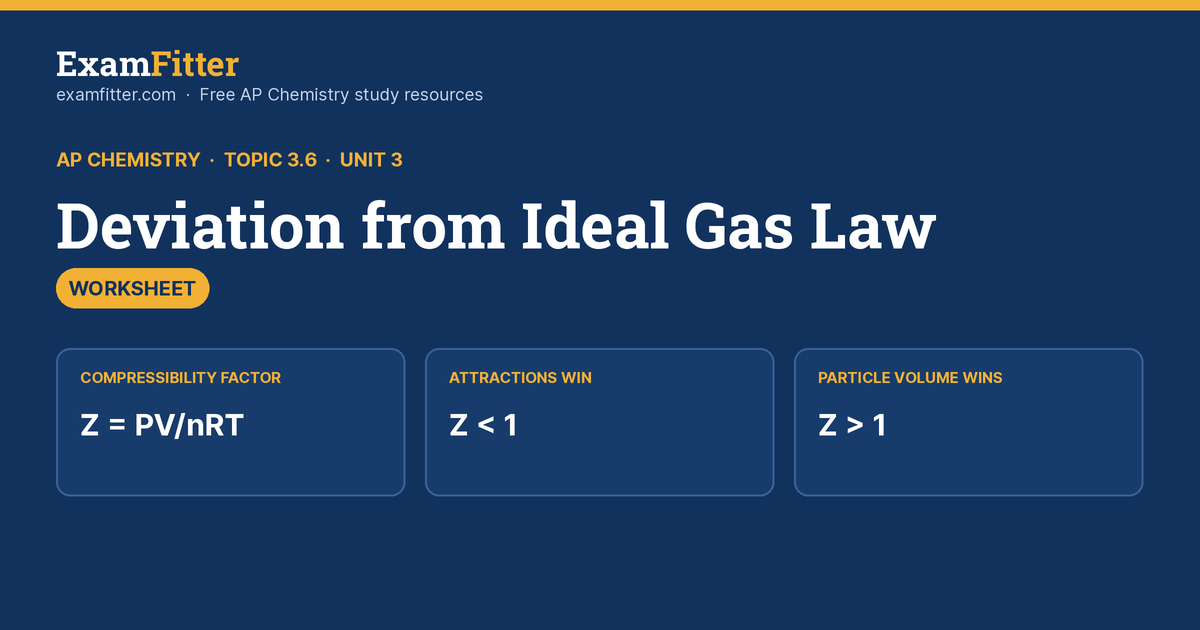
Topic 3.6: Deviation from Ideal Gas Law Worksheet

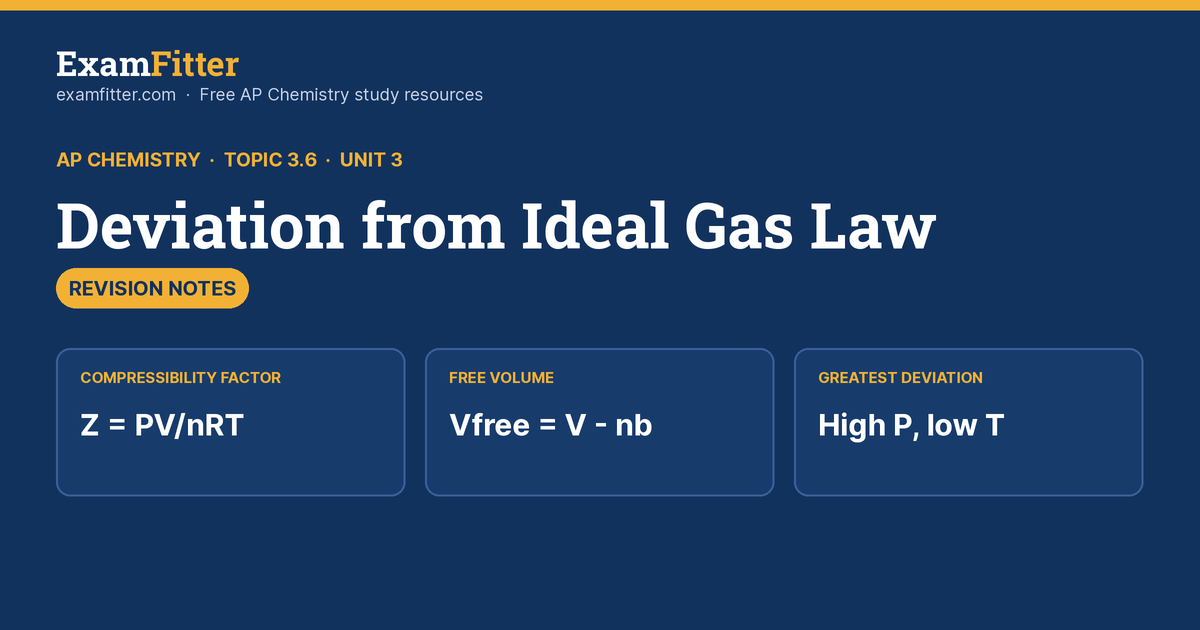
Topic 3.6: Deviation from Ideal Gas Law Worksheet

How to Use This Worksheet Work through the sections in order. Section A checks the two ideal assumptions that fail, Section B builds fluency with the compressibility factor and free volume, and Section C mixes conditions, gases and data in exam style. Name the dominant effect, attractions or particle volume, before stating any direction. Do … Read more

Topic 3.5: Kinetic Molecular Theory Worksheet

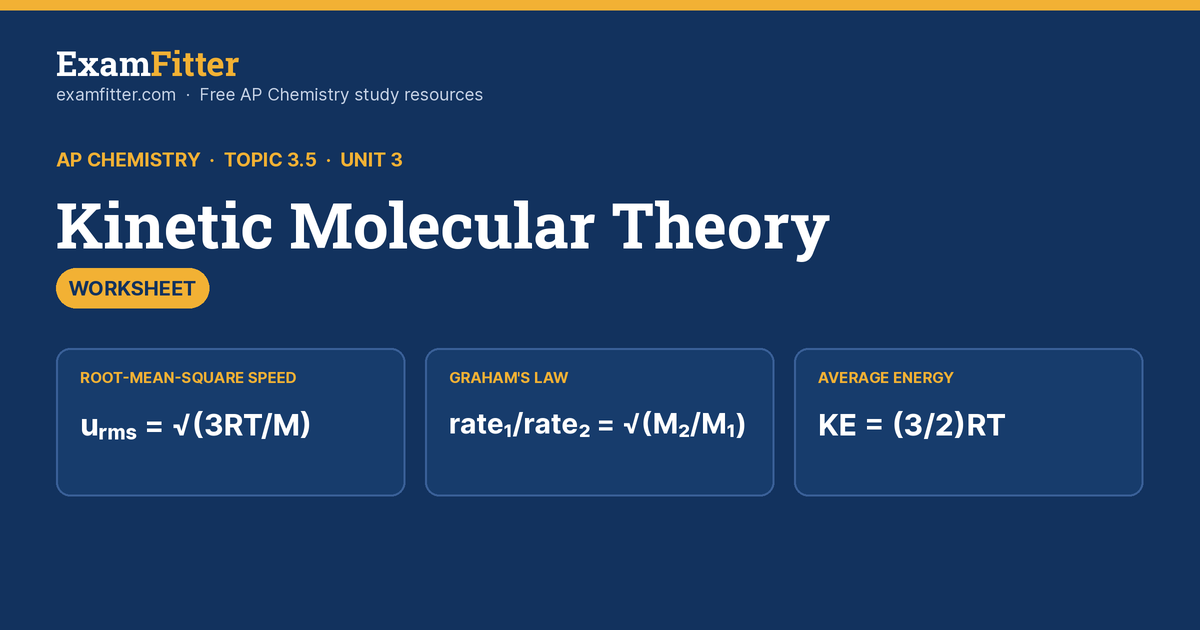
Topic 3.5: Kinetic Molecular Theory Worksheet

How to Use This Worksheet Work through the sections in order. Section A checks the postulates and the reading of Maxwell-Boltzmann curves, Section B builds fluency with average kinetic energy, root-mean-square speeds and Graham’s law, and Section C mixes everything in exam style. Two habits carry the whole topic: temperature goes into every formula in … Read more

Topic 3.5: Kinetic Molecular Theory Revision Notes

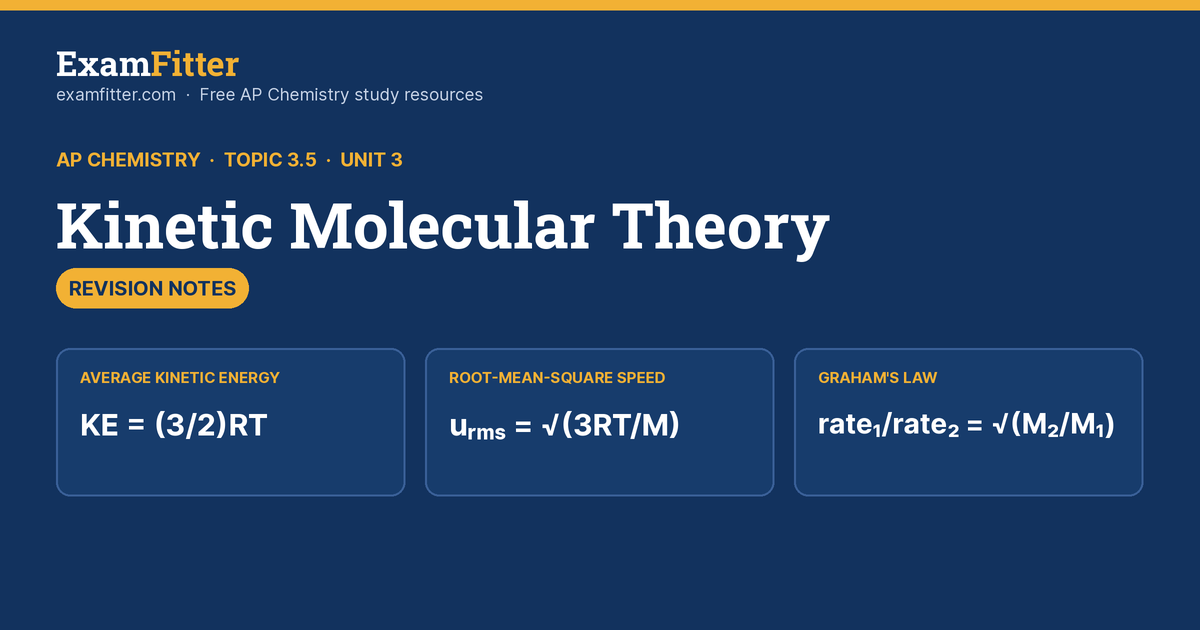
Topic 3.5: Kinetic Molecular Theory Revision Notes

The Model: Five Postulates Kinetic molecular theory explains the macroscopic properties of gases through the motion of their particles. It rests on five postulates. Particles are points. Their own volume is negligible beside the container’s: nearly all of a gas is empty space. Particles move constantly and randomly. They travel in straight lines until they … Read more

Topic 3.4: Ideal Gas Law Worksheet

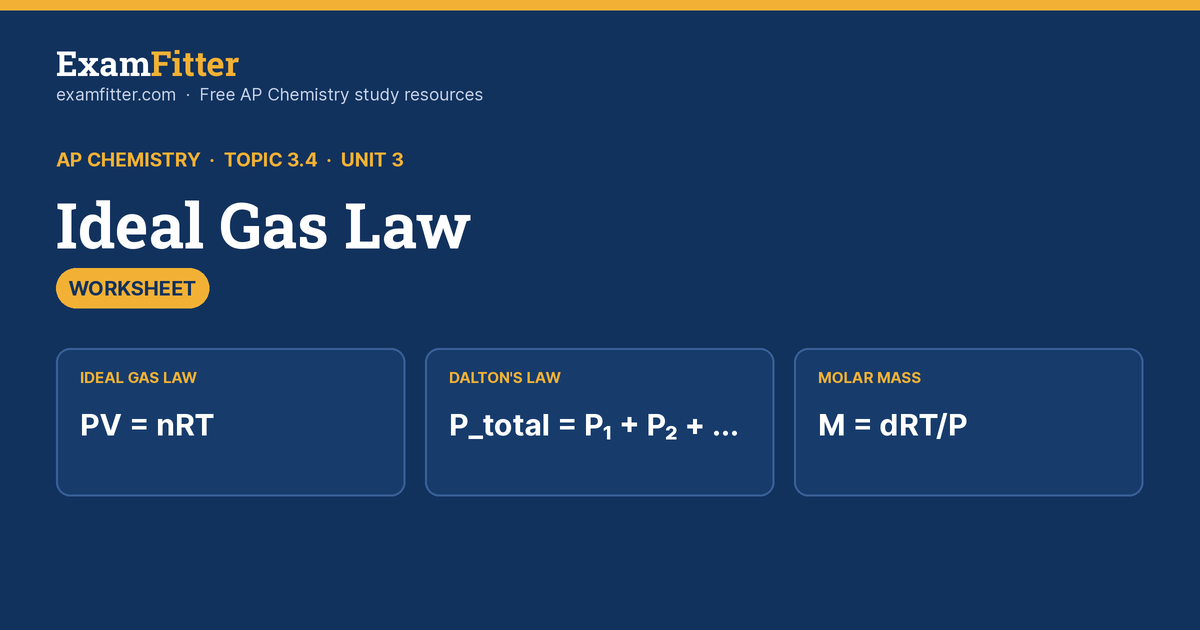
Topic 3.4: Ideal Gas Law Worksheet

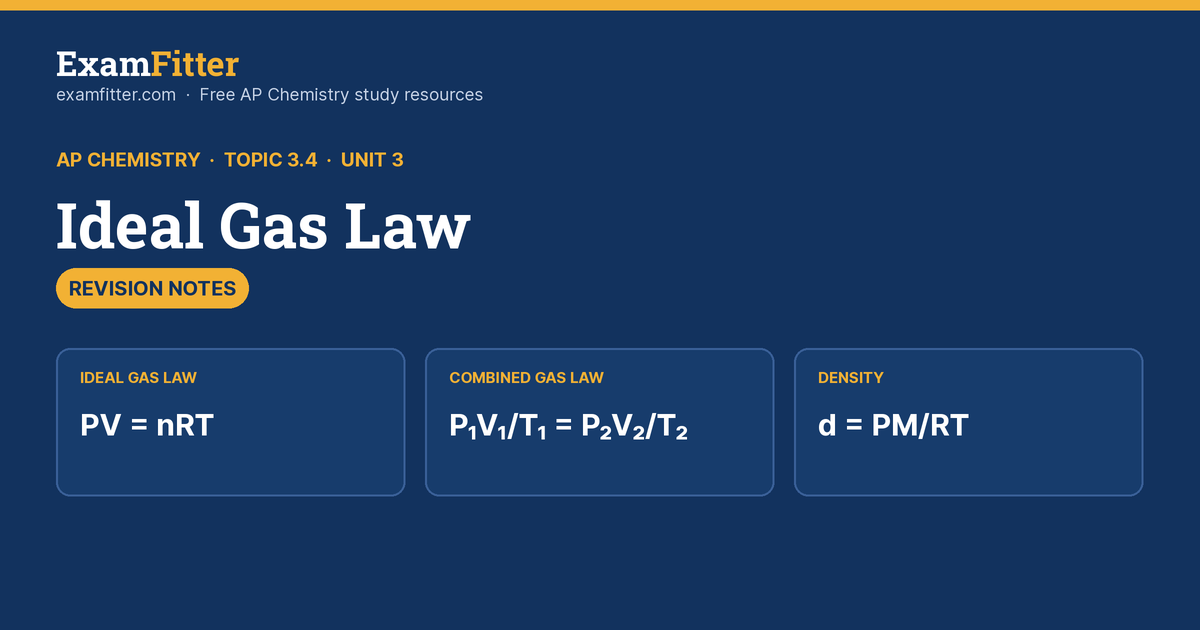
How to Use This Worksheet Work through the sections in order. Section A checks the ideas, Section B builds fluency with the ideal gas equation, the combined gas law, partial pressures and density, and Section C mixes everything in exam style. Two habits carry the whole topic: convert temperature to kelvin before anything else, and … Read more

Topic 3.4: Ideal Gas Law Revision Notes

Topic 3.4: Ideal Gas Law Revision Notes

Four Variables, One Equation A sample of gas is completely described by four macroscopic variables: pressure (P), the force per unit area from particles colliding with the walls; volume (V), the space the gas fills, which is the container’s volume; temperature (T); and amount (n), in moles. The ideal gas law ties them together: PV … Read more

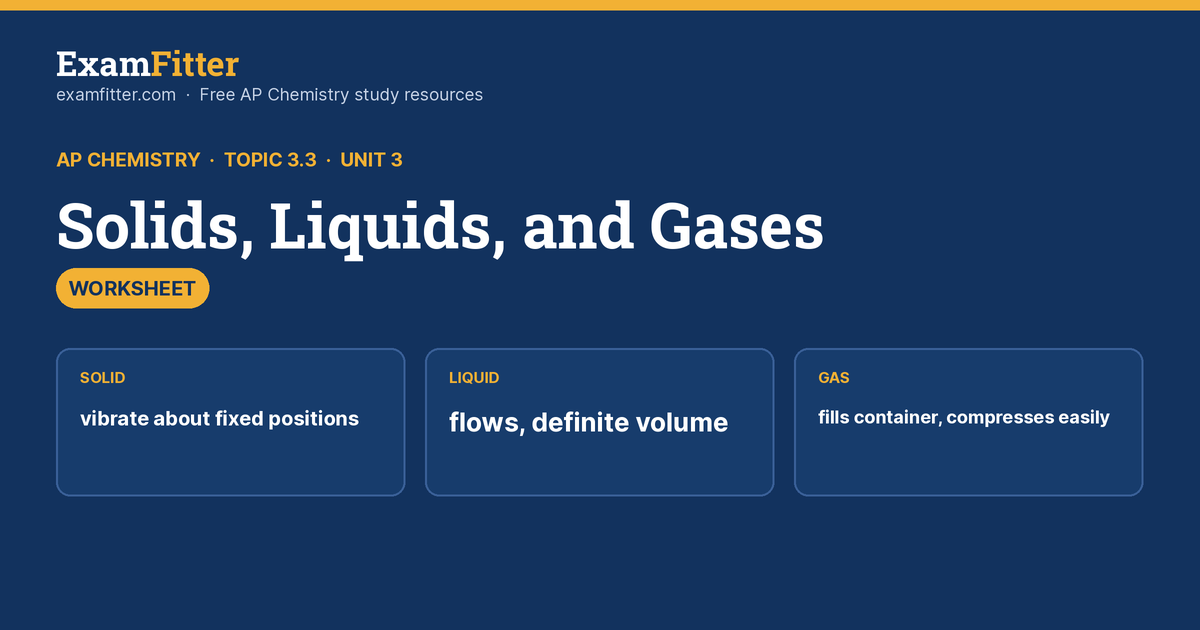
Topic 3.3: Solids, Liquids, and Gases Worksheet

Topic 3.3: Solids, Liquids, and Gases Worksheet

How to Use This Worksheet Work through the sections in order. Section A checks the ideas, Section B builds fluency with spacing, vapour pressure and boiling data, and Section C mixes everything in exam style. One habit carries the whole topic: for any property, settle the spacing, the motion, and who is winning, kinetic energy … Read more